Montessori in the 21st century
The Montessori method offers today’s children particularly effective and “powerful” tools to navigate an increasingly competitive world, in a way that differs from traditional educational models.
The method enables children to fully realize their potential and develop so-called “soft skills” (cross-sectional skills), the true drivers of long-term achievements, skills that enable them to adapt, create, collaborate, and engage in lifelong learning.
This approach is well-suited to contemporary challenges because it effectively develops and strengthens the “4Cs” of future skills:
- critical thinking
- creativity
- collaboration
- communication
How does the Montessori method channel competition into enhanced personal development and growth?
01.
Self-assessment
- External rewards and punishments are eliminated; instead, Montessori materials allow the children to correct their own errors.
- Children understand where they have gone wrong without facing judgment that might inhibit their development; this fosters powerful intrinsic motivation, a true “internal engine”, bringing out their full potential.
- The result is that, in the future, they will work towards goals driven by natural internal motivation rather than being afraid of making mistakes.
02.
Developing resilience and managing failure
- Mistakes are viewed as valuable learning tools, and children learn to persevere until they overcome obstacles; this “growth mindset” is vital today, enabling individuals to constantly reinvent themselves in the face of technological change.
- Furthermore, this approach to handling errors fosters remarkable perseverance and a greater tolerance toward frustration.
03.
Deep concentration
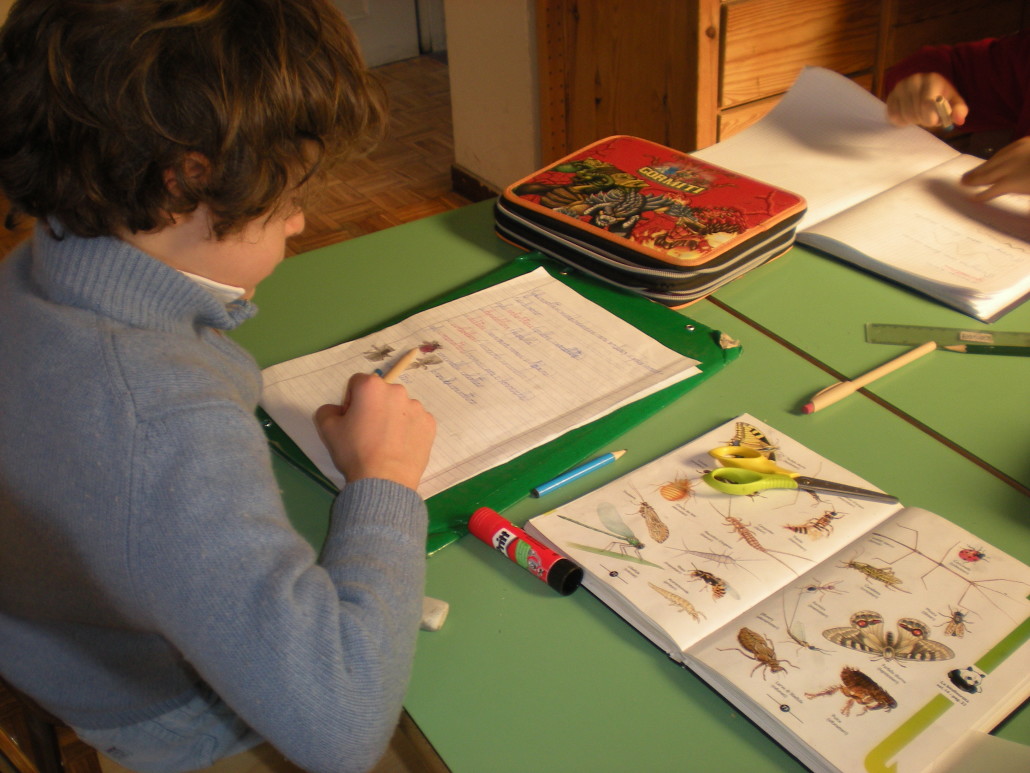
- The child chooses the activity and carries it through to completion in a state of deep concentration.
- The Montessori method intrinsically trains the mind to focus on a specific task, developing the ability to create a barrier against fragmented attention.
- The ability to stay focused is a huge advantage today: those who master their attention control their own learning.
04.
Adaptability and critical thinking
- Instead of memorizing predetermined concepts provided by the teacher, children learn through direct experience and their own work.
- Children learn to formulate hypotheses and independent solutions; this approach fosters a flexible mind capable of problem-solving.
05.
Autonomy and decision-making skills
- In the Montessori method, children are encouraged to choose activities, manage their time, and take on age-appropriate responsibilities.
- In a professional and social environment that increasingly demands personal initiative, this autonomy becomes a significant advantage.
- Children accustomed to making decisions, experimenting, and correcting themselves develop greater confidence in their own abilities.
- Maria Montessori believed that education should help the child to “do it themselves”: in a rapidly changing world, the ability to keep learning and navigate independently will be one of the most valuable skills of all.
06.
The importance of cooperation
- Classrooms foster collaboration among children of different ages: older children help younger ones, while younger children observe and learn from their older peers.
- Children learn daily that success stems from teamwork and from valuing the diverse roles and abilities each person brings.
open day
MORE INFORMATION
Come and discover our school!
Would you like to participate in the next OPEN DAY or have more information on our educational project?
Fill out the form alongside with your details to be contacted.